
Inver Grove Heights City Directory Collections
The strongest documented local city-directory source is the Minnesota Historical Society collection described in its Dakota County telephone-directory finding aid. The overall collection begins in 1928 and contains about 1,237 volumes and 226 microfiche. Its Inver Grove Heights listing is more limited but useful: 1957 through 1964, 1966 through 1986, and several entries from 1987 through 1989. These are telephone directories, not a complete roll of all people at an address. The white pages arrange residential and business subscribers alphabetically, while yellow pages organize businesses by subject.
| Collection | Years | Where Held | Access |
|---|---|---|---|
| Dakota County telephone directories | 1928 onward overall; Inver Grove run documented 1957-1964 and 1966-1989 | MNHS library collection, print and microfiche | Open for research; finding aid is online, but local page images were not freely located |
| Inver Grove telephone entries | 1987 yellow-pages-only and full directory; 1988 yellow-pages-only, full directory, and fiche; 1989 fiche and print | MNHS collection named in the finding aid | Confirm the exact volume or format before a visit or scan request |
| St. Paul South & West regional directories | 1947-1952, 1952-1956, and 1956-1959 runs with listed gaps | Gale/Cengage index and library or archive copies | Search under regional and historic locality names |
| Inver Grove city and village records | 1909-1996 | MNHS city-records finding aid and archival materials | Minutes, ordinances, petitions, agreements, resolutions, and histories supply context |
A city directory search should begin with the printed run closest to the date in question. Then widen the search if a volume is missing, a number was unlisted, or the name appears under a nearby community. The finding aid establishes the collection and formats; it does not provide a freely viewable scanned Inver Grove Heights listing for every entry.
Inver Grove Heights Telephone Directory Runs
The documented Inver Grove sequence has two main stretches: 1957-1964 and 1966-1986. The 1987-1989 references show a change in the materials rather than one uniform book format. That matters when a person does not appear in the first item requested. A yellow-pages-only volume is a business finding tool, while a full directory and a fiche copy may offer different ways to consult the same era. Treat the volume description as a routing clue, not evidence that any particular name was printed.
A listing can provide a useful address or telephone lead, but it can also reflect a business line, an unlisted household, or the subscriber rather than everyone present. Make a note of the volume year, locality heading, whether it is white or yellow pages, and every visible field before comparing it with tax, deed, census, church, cemetery, obituary, or newspaper material. That record of the source avoids turning one line in a phone book into a claim of uninterrupted residence.
The MNHS directory finding aid is the source for this collection summary and its Inver Grove year runs.
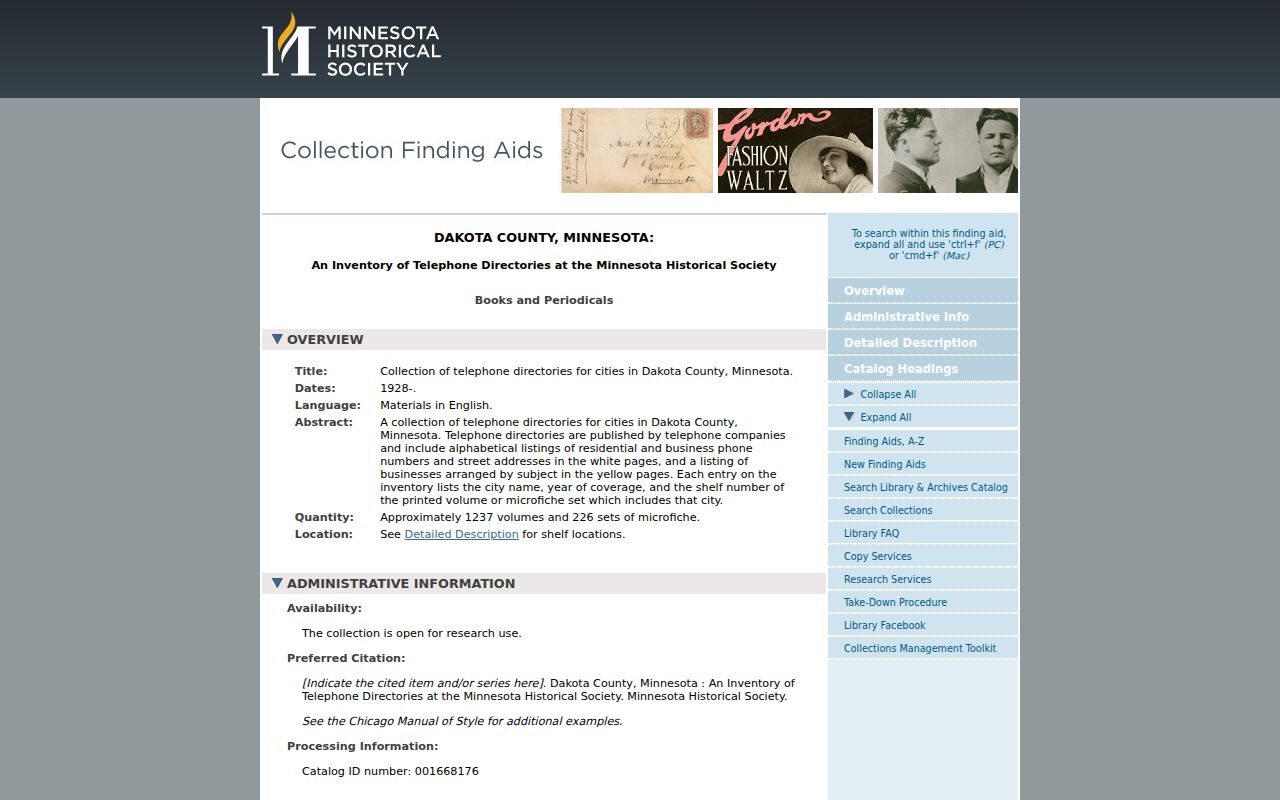
The finding aid is especially useful before requesting a scan because it distinguishes print, fiche, full-directory, and yellow-pages references.
Inver Grove Heights Directory Gap in 1965
The collection lists 1964 and then 1966 for the main documented local run. The city history places formation of modern Inver Grove Heights in 1965, making the missing collection year easy to overread. It is a gap in the observed MNHS series, not proof that no directory was produced in 1965. Use the surrounding books first, then seek a regional St. Paul South & West volume, city or village records, tax and deed material, newspapers, and the released federal census sequence.
This is a local research trap because municipal names changed near the same time. The official history identifies a township organized in 1858, a Village of Inver Grove incorporated in 1909, and more than 56 years of overlapping township and village government before the modern city formed. Search “Inver Grove,” “Invergrove,” township, village, “South St. Paul & West,” and “St. Paul South & West” instead of relying only on the current city name.
The official city history is the source for the township, village, and modern-city chronology used in this search strategy.
Inver Grove Heights Regional Directory Names
Older regional city directories can extend a search before the local telephone run. The Gale/Cengage city-directory author index describes St. Paul South & West coverage that includes Inver Grove, Newport, and St. Paul Park. The 1947-1952 run has listed gaps for 1948, 1950, and 1951. The 1952-1956 run has a 1953 gap. The 1956-1959 run includes a missing 1957. Those gaps describe the documented regional series, so neither a blank year nor a blank name should be treated as a final result.
Regional directories are a companion layer. They may use postal-community or regional labels instead of a modern municipal heading, and they do not prove that every Inver Grove household was included. Search a surname, address, phone number, and locality variants. When the goal is a current confirmation rather than historical context, a directory finding can be checked through the Inver Grove Heights resident lookup workflow.
Note: Record the regional title and the exact year because the similar St. Paul labels describe a coverage area, not interchangeable books.
Reading Inver Grove Heights City Directory Entries
The collection description verifies only a limited set of fields. White pages are alphabetical residential and business subscriber listings with a name, classification, telephone number, and street address. Yellow pages are business subject listings. No actual Inver Grove Heights directory page was freely available for inspection, so fields often found in other directory series, such as a spouse notation, work line, ownership mark, widow notation, or abbreviation code, cannot be presented as verified local fields here.
| Name | Alphabetical subscriber name in a documented white-pages listing. |
|---|---|
| Classification | Residential or business context when represented by the collection description. |
| Telephone number | The subscriber phone number, which can be absent for an unlisted account. |
| Street address | The printed address in a white-pages listing, useful for a dated location check. |
| Business subject | A yellow-pages category, not a household listing. |
- Criss-cross directory
- A directory arranged by address or street rather than by name. Its availability for a particular Inver Grove volume is unconfirmed and should be checked with the holding institution.
- Householder index
- An address-oriented index that can identify the listed household contact. No verified Inver Grove series is assumed.
- Abbreviation key
- A volume guide that explains shortened labels. Inspect the actual volume before relying on a symbol or abbreviation.
Photograph or transcribe the title page and any key with the entry. That preserves the directory year, publisher context, and the distinction between a verified printed field and an assumption imported from another city’s directories.
Inver Grove Heights Directory Research Access
MNHS is the documented collection route. Its library and archives entry point lists books, serials, newspapers, photographs, maps, local-government records, school censuses, county and township vital records, tax lists, and railroad records. Ask staff to confirm an exact directory title, fiche reel, scan option, catalog entry, or interlibrary-loan possibility before traveling. The source establishes broad archival holdings, not that every title is available in every format or online.
The Inver Glen Library confirms the local Dakota County Library branch and the county catalog. The public branch page does not establish a special Inver Grove Heights directory shelf, a reverse directory, or a named licensed database. Staff and the catalog can still help identify local access to a microfilm reader, a scan request, interlibrary loan, or a licensed research session. Confirm the particular holding first.
MNHS library and archive services are a practical starting point for the wider local-history record trail.
MNHS offers the broader archival context when telephone directories need to be paired with maps, tax lists, local government records, or newspapers.
Inver Glen Library’s official branch page identifies the nearby county-library access point.
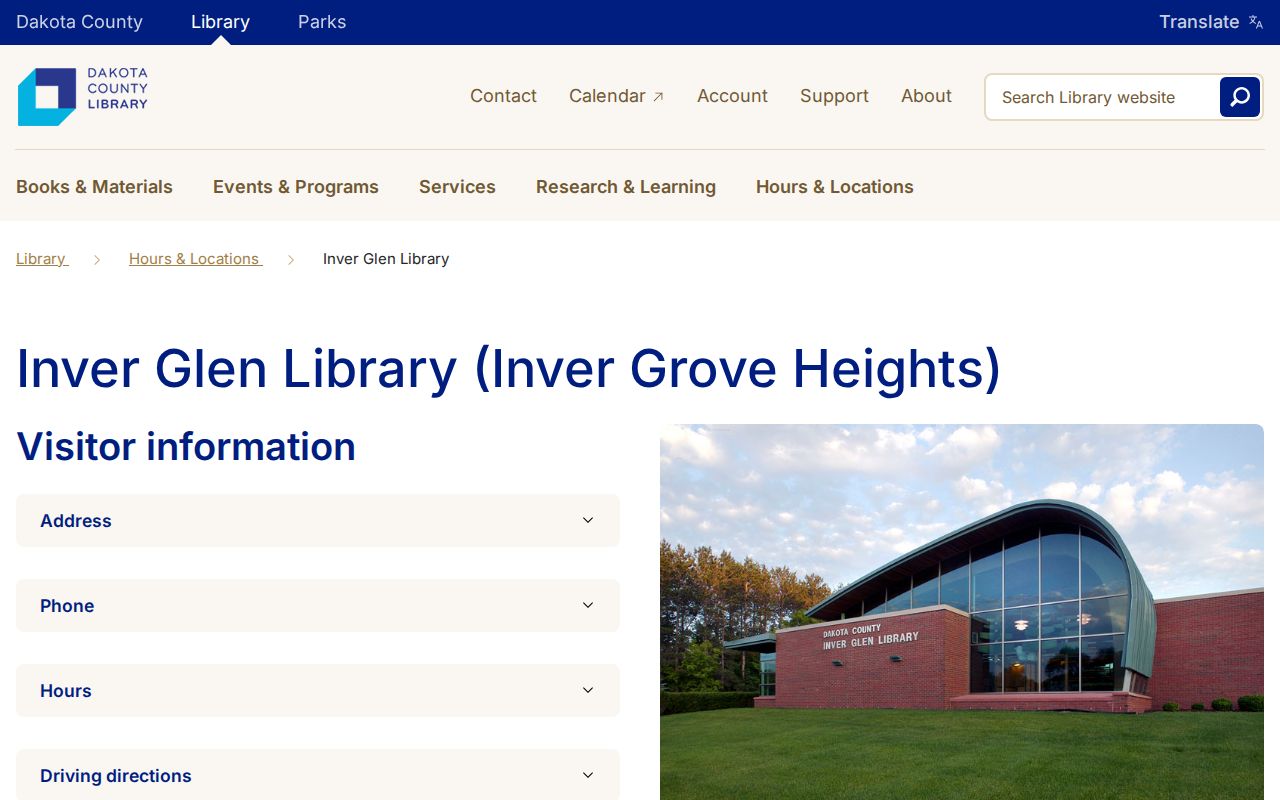
The branch is a sensible place to confirm current equipment and catalog availability before relying on a claimed shelf or database.
Inver Grove Heights Directory Research Help
The Dakota County Historical Society research program adds church, cemetery, census, military, obituary, marriage-announcement, newspaper, print, microfilm, and online material that can test a directory lead. Its Lawshe Memorial Museum/Research Library is at 130 3rd Avenue North in South St. Paul. The reported research-service rate is $15 per half-hour. The stated hours are Wednesday and Friday 9-5, Thursday 9-8, and Saturday 10-3; the phone number is 651-552-7548.
Use the historical society when a directory name needs context, not as an assumption that it holds the exact local phone volume. A targeted request can name the person, address, date range, locality variants, and the type of companion record sought. That makes it easier to find church, cemetery, census, or obituary material without confusing those records with a city directory.
Inver Grove Heights Directory Collection Timeline
The directory trail is easier to interpret when collection dates are kept beside local government names. These milestones describe accessible research context, not the full history of every residence.
- 1858: Inver Grove Township was organized, creating an older place name to search.
- 1909: The Village of Inver Grove incorporated; MNHS city and village records begin in this era.
- 1947-1959: Regional St. Paul South & West directories offer earlier coverage with listed gaps.
- 1957-1964: The documented Inver Grove telephone-directory run appears in the MNHS finding aid.
- 1965: Modern city formation coincides with a documented collection gap, not proof of a missing published directory.
- 1966-1989: The documented run resumes, with yellow-page, full-directory, fiche, and print references late in the period.
The MNHS Inver Grove records finding aid gives a separate local-government trail: city and village records from 1909-1996, council minutes from 1909-1960, ordinances from 1910-1957, petitions and related records from 1911-1964, and histories from 1973-1996. These materials help explain a locality name or official action when a directory is silent.
Tracing Inver Grove Heights City Directories With Census
A household trail works best when the directory is treated as one dated observation. Begin with a known address or surname in the volume nearest the target year. Search the alphabetical pages, then ask the holding institution whether an address-ordered or criss-cross companion exists for that year. Note names, classification, phone, street address, and the source details exactly as printed. Follow the person or address into the next available directory, allowing for an unlisted number, a business line, spelling changes, rural-route wording, or a move.
- Identify the closest documented telephone-directory year and search the surname and locality variants.
- Record the verified fields, volume format, and address without adding unobserved household details.
- Check adjacent available years, including a regional volume when the local run has a gap.
- Pair the result with federal census material released through 1950 under the 72-year public-release rule.
- Use tax, deed, obituary, cemetery, church, newspaper, or city-village records to test the timeline.
Federal census schedules can support a broader household picture, but a directory and census together still do not establish continuous residence. A directory disappearance may mean a move, an unlisted phone, a changed surname, a business-only listing, or a collection gap. Preserve that uncertainty in family notes.
Note: Search historic place names whenever a modern-city query produces no result, especially for the township, village, and regional St. Paul directory eras.